Choosing an Ultra Low Freezer
Choose a Minus 80 freezer to suit the samples being stored, available space, storage volume, energy costs, monitoring requirements and how often the freezer will be accessed.
What to Consider When Buying a Minus 80 Freezer
An ultra low temperature freezer should provide reliable long-term storage at around -80°C for biological samples such as DNA, RNA, proteins, cell extracts and reagents, while fitting the way your laboratory stores and retrieves samples.
Minus 80 freezer prices vary considerably depending on the manufacturer, capacity and features. A compact underbench freezer will generally cost less than a large upright model, although there can be substantial differences between freezers of similar sizes. Prices are shown in Australian dollars, excluding GST, alongside each model above.
Look beyond the purchase price. Energy consumption, usable storage space, temperature monitoring and backup options can make a considerable difference over the working life of a freezer.
Ultra Low Freezer Checklist
- Required storage temperature (-80°C or -86°C)
- Usable capacity in racks and sample boxes
- External dimensions, door access and ventilation
- Upright, chest or underbench configuration
- Energy consumption (kWh/day) and heat output
- Refrigerant type
- Inner doors and lockable access
- Temperature and power failure alarms
- Data logging and remote monitoring
- CO2 backup compatibility
- Power outlet requirements
- IQ/OQ, warranty and servicing
Ultra Low Freezer Energy Consumption and Running Costs
Running a freezer continuously at -80°C uses a considerable amount of electricity, so energy consumption is worth checking before purchasing.
Look for the manufacturer's published energy consumption in kilowatt-hours per day (kWh/day). For example, a freezer consuming 10 kWh per day will use approximately 3,650 kWh annually. At 30 cents per kWh, that's around $1,095 a year in electricity.
Actual consumption depends on the room temperature, freezer settings and how often it's opened. Make sure you're comparing figures measured under similar conditions.
Ultra low freezers also release heat into the surrounding room. If you're installing several freezers together, the additional load on your laboratory's air conditioning is worth considering.
Many newer ULT freezers use natural hydrocarbon refrigerants, which have a much lower environmental impact than older synthetic refrigerants. If your organisation has sustainability targets, ask us about the refrigerant and energy figures for the models you're considering.
Ultra Low Freezer Size and Configuration
The most suitable Minus 80 freezer depends on sample volume, available space and how frequently samples need to be retrieved.
Upright, Chest or Underbench?
Upright ultra low freezers have shelves and separate inner doors, so samples can be organised and retrieved without exposing the whole freezer. They suit laboratories that access samples regularly.
Chest ultra low freezers have a top-opening lid that helps reduce cold air loss. They can suit long-term storage where samples are accessed less often.
Underbench ultra low freezers are compact enough to fit on or under a standard laboratory bench, making them useful when space is limited or only a small storage volume is needed.
Choosing the Right Capacity
Freezer capacity is generally quoted in litres, but this doesn't necessarily tell you how many samples you'll be able to store. Compare how many racks and sample boxes each model holds, and allow for future growth.
Check external dimensions, doorway access and ventilation clearances before ordering. Suitable ultra low freezer racking can help organise samples and make better use of the available space.
Ultra Low Freezer Monitoring and Backup Systems
If you're storing valuable or irreplaceable samples, plan for what happens if there's a power failure or refrigeration fault.
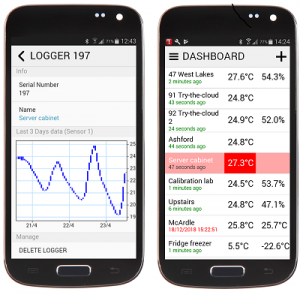
Most modern ULT freezers have built-in temperature alarms, but an independent temperature monitoring system can provide additional protection. Depending on the system, it can record temperatures and send remote alerts, which is particularly useful when problems occur outside normal working hours.
Some freezers can also be fitted with CO2 backup systems to help maintain low temperatures if the main refrigeration system fails. Compatibility and backup duration need to be checked carefully.
Warm-up performance varies between models. If power failures are a concern, compare the manufacturer's warm-up data and consider how staff will be alerted and where samples could be moved during an extended outage.
Installation, IQ/OQ and Ongoing Support
ENLAKE has supplied medical and laboratory refrigeration throughout Australia since 2009.
ENLAKE can arrange delivery, positioning, installation and initial setup where required. We can also provide installation and operational qualification (IQ/OQ), calibration, temperature mapping and performance verification.
Our support doesn't stop at delivery. If something goes wrong, call us first. We usually already have your purchase, model and serial details on record, so we can start straight away. We'll troubleshoot, work with the manufacturer on warranty claims, and arrange a qualified technician or replacement parts if needed. See Service & Support for details.
ENLAKE can help compare ultra low freezers from different manufacturers according to capacity, energy consumption, monitoring, backup options, installation requirements and budget. Contact us or call 1800 094 259.
Ultra Low Freezer FAQs
Answers to common questions about Minus 80 freezers, running costs, power requirements and delivery.